Scott Fieber, Chief Strategy Officer at Cook Solutions Group, joins the Digital Banking Podcast to discuss why the biggest barrier to fintech innovation isn't technology—it's the vendor relationships that surround it.
Guest: Scott Fieber, Chief Strategy Officer, Cook Solutions Group | Host: Josh DeTar, Digital Banking Podcast | Powered by: Tyfone
Community financial institutions are in a difficult spot. On one side, legacy technology vendors have locked them into long-term contracts that make switching painful, expensive, and operationally risky. On the other, a new wave of neobanks, fintechs, and even coffee companies are quietly capturing deposits and eroding relationships that credit unions and community banks spent decades building.
The solution, according to Scott Fieber, isn't just better technology. It's better collaboration—with partners, with customers, and across internal departments that rarely talk to each other.
The Lock-In Problem: Why Innovation Stalls at the Core
Fieber has spent years watching a frustrating pattern repeat itself at community financial institutions: an IT director or executive spends an entire meeting venting about how much they dislike their core vendor—and then signs a three-year renewal anyway.
"You sit down in a meeting and they go on a rant about how much they dislike this company, and then they say, 'Yeah, we're re-upping for another three years,'" Berr said. "Why? Because they either don't have an option, or it takes a lot of guts—and a lot of resources—to peel away."
This isn't a vendor-size problem. Large companies can be great partners; small companies can be exploitative. The key variable is incentive structure. When a vendor's success is measured by earnings-per-share instead of customer outcomes, the relationship is adversarial by design—even when everyone at the table is perfectly friendly.
"If I could wave one magic wand, I do feel like the crux of the lack of innovation is these massive companies holding everyone hostage. Innovation would be way further down the road than it is today."— Scott Fieber, CSO, Cook Solutions Group
The Starbucks Problem: Competition From Unexpected Directions
While many community FIs are focused on competing with large regional banks and national credit unions, the competitive threat has quietly expanded to companies that don't even call themselves financial services providers.
Consider Starbucks. Most people have money loaded on their Starbucks app right now. For a 100,000-member credit union where every member has even $10 sitting in a Starbucks account, that's $1 million in deposits that never came through the door. Add Venmo, Amazon, Apple Pay, and a dozen other apps on the average person's phone—apps that may not advertise themselves as financial products, but functionally are—and the deposit competition picture gets considerably more complicated.
"When Starbucks first started as a coffee company in Seattle, would you have thought they'd come for your deposits?" Fieber asked. "That was not on my bingo card."
The issue isn't that these companies offer financial services. It's that community FIs, hampered by legacy systems and contractual complexity, can't move fast enough to respond. FinTechs, neobanks, and tech companies entering financial services don't have that problem—they're building on clean infrastructure from day one.
Partner vs. Vendor: The One Question That Tells You Everything
Both Fieber and host Josh DeTar have talked to hundreds of financial institutions over their careers. One question cuts through more noise than any RFP or product demo: When was the last time your vendor asked for your opinion on something?
Not "here's what we're selling next quarter." Not "here's our product roadmap." Did they ask what you're struggling with? Did they connect you with someone else in the industry who might help? Did they bring a thought into the room that wasn't attached to a price tag?
"Are they actually collaborating with you, getting to know your business, getting to know what drives you—or just coming in with the canned pitch?" Fieber said. "If you feel like service is your core value, shouldn't you be asking the same from your vendor partners?"
True partners, in Fieber's view, earn revenue as a byproduct of being genuinely useful over time. A vendor who has your best interest at heart can afford to take the long view because the relationship itself creates value before any transaction occurs.
The Hidden Value Already in Your Stack
One of the most actionable parts of this conversation involves a counterintuitive claim: most community FIs are using somewhere between 10 and 15 percent of the capability already embedded in the platforms they're paying for.
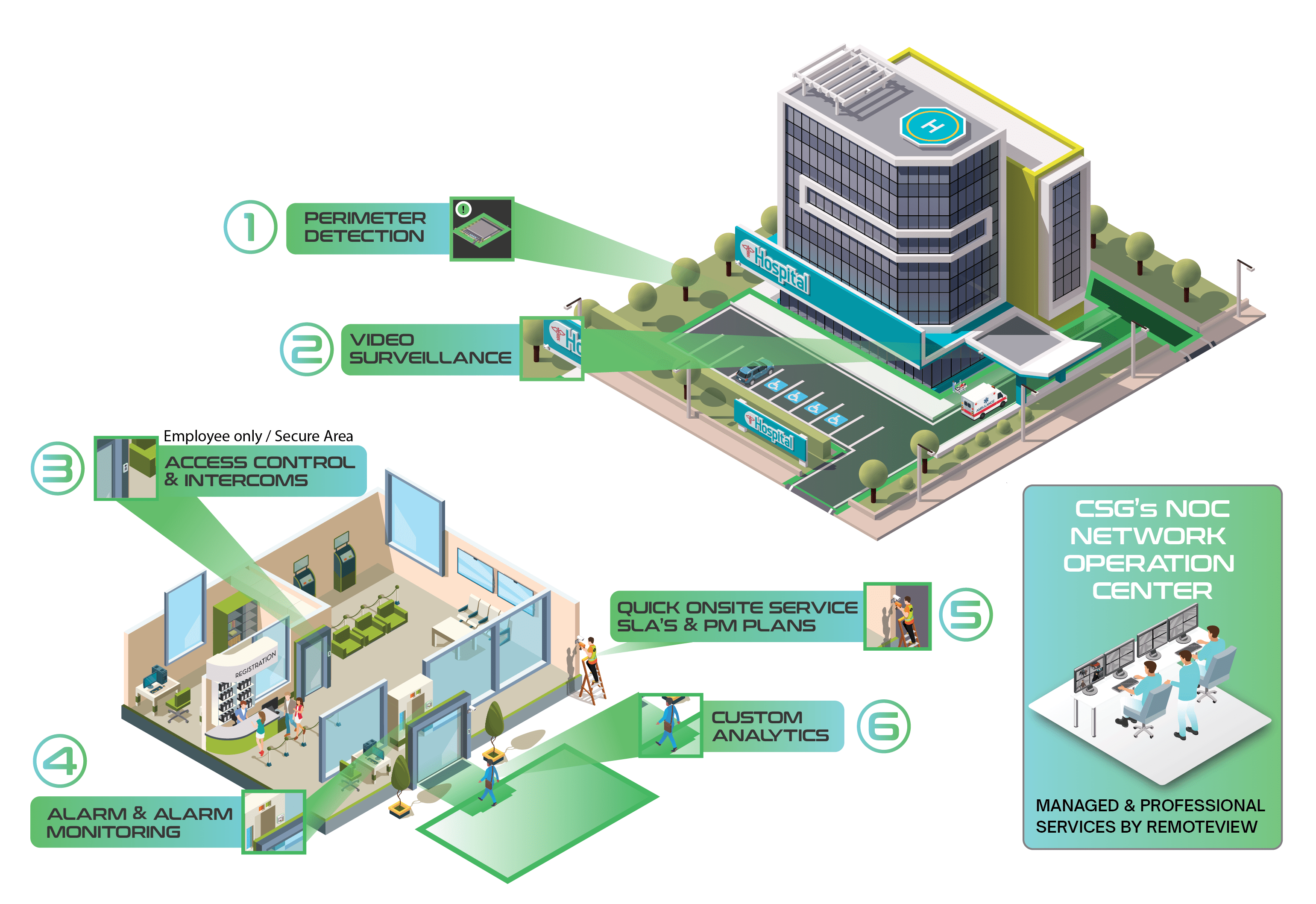
This isn't an indictment of the institutions—it's a systems problem. Security teams buy camera systems for security purposes. They have a budget, a specific set of requirements, and limited visibility into what the marketing team might do with that same data. The marketing team, meanwhile, is trying to understand branch traffic patterns and customer sentiment—often by looking at expensive, purpose-built solutions.
Nobody told them the answer was already installed on the wall.
In both cases, the key wasn't a new product. It was a different conversation—one that happened because the vendor was paying close enough attention to ask "what if?" instead of "ready to renew?"
Breaking Down Internal Silos
The heat mapping example points to a challenge that's entirely internal: community FIs often make technology decisions in departmental silos, without visibility into how a purchase in one part of the organization could serve another.
A facilities manager picking out security cameras shouldn't necessarily need to run a committee process. But if they've never had a conversation with the retail or marketing team about what data those cameras could generate—and nobody at the vendor level is asking those questions—valuable capabilities go unused indefinitely.
"Until you know what you're going to do with data, there's no reason to turn the analytics on," Fieber acknowledged. "That's on us as a vendor to help figure out. Let's get more people involved. The technology is already there. In some cases, you're already paying for it."
The practical implication: the institutions getting the most out of their technology investments tend to be the ones whose core vendor partners are actively facilitating those cross-departmental conversations—not waiting to be asked.
On AI: Optimistic, With Caveats
No conversation about banking technology in 2024 avoids the AI question. Fieber's view is measured: he's genuinely optimistic about AI's potential to dissolve some of the vendor lock-in dynamics he's spent years frustrated by, but he's also clear-eyed about the pace of change.
"I can go use some of the new AI tools to write code, and I'm not a technologist," he said. "Get somebody who actually knows what they're doing—that's pretty crazy if we think we're so safe that nobody could build a better platform using AI."
The implication for vendors: the competitive moat created by technical complexity and switching costs is narrowing. Companies that haven't been investing in genuine customer relationships—the kind that create loyalty beyond contractual obligation—are going to find that a decreasing share of their renewals feel inevitable.
For financial institutions: build strategies that are flexible by design. Any technology plan that extends more than a couple of years without explicit provisions for adaptation isn't a strategy—it's a guess. The pace of change demands humility about what you know today.
"I'd be a fool to have a strategic direction that's out more than a couple of years, because it's going to be totally irrelevant by then anyway. You've got to work in the now."— Scott Fieber, CSO, Cook Solutions Group
What Good Collaboration Actually Looks Like
Fieber's definition of a strong vendor partnership is straightforward, and it's grounded in behavior rather than contract terms. Are they showing up between renewal conversations? Are they bringing you problems before they become crises? Are they making introductions—to peers, to other providers, to ideas outside their own product catalog?
"If you're a good partner and you're genuinely interested in what's making that company successful, the money's going to come eventually," Fieber said. "But you've got to solidify yourself in that lens first."
For community FIs evaluating their current vendor relationships, Fieber offers a practical challenge: sit down with your core partners on a regular basis—not just at renewal time. Bring things to the table that aren't in their wheelhouse. You might find that your security vendor has a smarter answer to a marketing problem than anyone in the marketing-analytics space does.
Why CSG Operates the Way It Does
Fieber is candid about why he's at Cook Solutions Group and not somewhere else. It comes down to watching the company's owner, Brian, do the right thing for customers repeatedly—even when it wasn't financially rational in the short term.
"I've seen Brian do the right thing over and over again for customers, even when it didn't make any sense financially for us to do it," Fieber said. "That aligns with me a hundred percent. If you're looking for a company that wants to do right by you and collaborate with you—we're one of the good guys."
That operating philosophy extends to how CSG thinks about bundling. The goal isn't to create the same lock-in dynamics they critique in the broader market—it's to reduce integration friction and make the technology customers already have work harder for them. Bundle-and-save as a concept isn't new; the difference is whether the bundling makes the customer more capable or more dependent.
Scott Fieber is available directly for conversations about security technology, fintech strategy, and what it looks like to be a genuine partner in the community banking space. Explore everything Cook Solutions Group offers at cooksolutionsgroup.com.
CSG's newsletter is worth subscribing to—self-described as "quirky and fun," and apparently so popular that the beer blog at the bottom drives unusually high scroll depth. Make of that what you will.















.png)